
Why Hydrogen Could Help Power the Future of Artificial Intelligence
From the Craig Bushon Show Media Team
Artificial intelligence is about to run into a problem most people never think about.
Electricity.
The newest AI supercomputing centers require as much power as entire cities. Technology companies are building these massive facilities right now.
That raises a simple question.
Where will all that electricity come from?
Behind the scenes, a new energy race is already starting. It involves hydrogen energy storage, nuclear power, and a redesign of the electric grid itself.
The future of artificial intelligence may depend not only on computers and software.
It may depend on who can produce and store enough electricity to run it.
Welcome back to The Craig Bushon Show, where we don’t just follow the headlines… we read between the lines to get to the bottom line of what’s really going on.
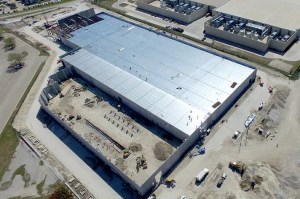
AI Data Centers Are Becoming Massive Power Users
For years, data centers powered the internet quietly in the background. These buildings store information and run the servers behind websites, apps, and cloud computing.
Most traditional data centers used about 20 to 50 megawatts of electricity.
Artificial intelligence has changed that.
Training large AI systems requires thousands of powerful computer chips running at the same time. These chips generate huge amounts of heat and require enormous amounts of electricity.
Today’s largest AI data centers can require 300 megawatts to over 1,000 megawatts of power.
That is about the same electricity used by a medium-sized city.
Companies like Meta, Microsoft, Google, and Amazon are building huge new data centers across the United States to support AI systems.
The challenge is simple.
Our power grid was never designed for single buildings that need as much electricity as a city.
The Electric Grid Was Built for a Different World
America’s electric grid developed over decades to power homes, factories, and office buildings.
It was not built to supply gigawatt levels of electricity to one location.
Building new power plants takes years. Expanding power lines can take even longer.
Yet technology companies are investing billions of dollars in AI infrastructure today.
So why are they building these massive facilities now?
Because they believe new energy systems will soon provide the power needed to run them.
One technology receiving increasing attention is hydrogen energy storage.

Hydrogen: A Giant Battery for the Electric Grid
Renewable energy sources like solar and wind are growing quickly. But they have a problem.
The sun does not shine at night. The wind does not always blow.
Artificial intelligence systems cannot simply shut down when energy production drops.
They need continuous power.
Hydrogen may help solve this problem.
Electricity can be used to split water into hydrogen and oxygen through a process called electrolysis. The hydrogen gas can then be stored and later used as fuel to generate electricity when it is needed.
In simple terms, hydrogen can act like a giant battery for the electric grid.
But unlike typical batteries, hydrogen can store energy for weeks or even months.
Large hydrogen storage projects are already being developed in the United States.
In Utah, a facility called the Advanced Clean Energy Storage project plans to store hydrogen deep underground in natural salt caverns. These underground formations can hold enormous amounts of energy.
When electricity demand rises, the stored hydrogen can be used to produce power for the grid.
The Southeast Could Play a Major Role
This shift toward hydrogen infrastructure is not just happening in one place.
Across the country, organizations are working to build the partnerships needed to support a hydrogen economy.
One example is the Southeast Hydrogen Energy Alliance, based in Tennessee. The alliance connects energy companies, universities, utilities, and policymakers across the Southeast to help develop hydrogen technology and infrastructure.

Learn more here:
https://seh2.energy/
The Southeast has several advantages that could make it an important region for hydrogen energy.
The Tennessee Valley Authority operates one of the largest public power systems in the country.
The region also includes Oak Ridge National Laboratory, one of the world’s leading research centers for energy technology.
In addition, the Southeast has strong manufacturing industries, major shipping ports, and growing data center development.
All of these factors could make the region an important part of America’s future energy system.
Energy Security Matters Too
There is another important issue that often gets overlooked.
Large AI data centers depend completely on electricity.
If power were disrupted for long periods, it could interrupt cloud computing services, communication networks, and financial systems.
Security experts have long warned that power grids are part of a nation’s critical infrastructure.
This means protecting energy systems will become increasingly important as artificial intelligence becomes more central to the economy.
Hydrogen storage may help improve resilience because energy can be stored underground and used later if power supplies are interrupted.

The New Energy System Behind AI
The future energy system that powers artificial intelligence will likely combine several technologies.
These may include:
nuclear power
natural gas plants
solar and wind energy
hydrogen storage
advanced electric grid systems
Together these systems could create a more flexible and reliable power network capable of supporting the enormous energy demands of artificial intelligence.
What to Watch Next
Several developments will determine how this energy transition unfolds.
Hydrogen storage projects are expanding as companies test long-term energy storage systems.
Small modular nuclear reactors are being developed to provide steady electricity near industrial sites.
Regional energy alliances are forming to coordinate infrastructure planning and workforce development.
These developments may determine which regions become the centers of the next generation of energy infrastructure.
The Bottom Line
Artificial intelligence is changing the world in many ways.
But one of the biggest changes may happen far from computer screens.
It will happen in power plants, underground energy storage caverns, and electrical grids that keep those computers running.
The future of artificial intelligence may not be written only in lines of computer code.
It may also depend on who can generate, store, and deliver the enormous amounts of electricity needed to power the machines of the future.
And here on The Craig Bushon Show we don’t just follow the headlines… we read between the lines to get to the bottom line of what’s really going on.
Disclaimer
This article is intended for educational and informational purposes only. The views expressed are based on publicly available information and ongoing developments in artificial intelligence and energy infrastructure. Technologies and timelines discussed in this article are evolving rapidly and should not be interpreted as investment advice or technical guidance.


